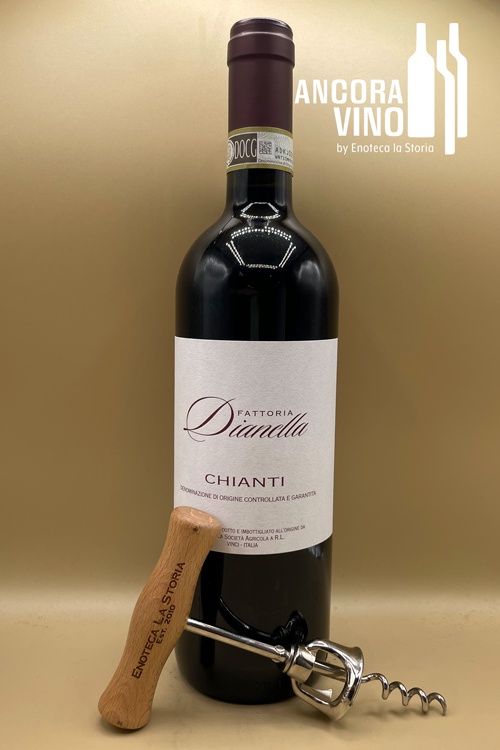
2023 Fattoria Dianella Chianti DOCG
$27.00
Tuscany, Italy
In stock: 5 available
1
Save this product for later
2023 Fattoria Dianella Chianti DOCG
Product Details
Wine Type: Red Wine
Grape Varietal: Sangiovese
Country of Origin: Italy
Appellation/Region: Tuscany
Farming: Organic
Mostly Sangiovese, with some Colorino, all organically grown (certified). Fermented in stainless steel with a 2-3 week maceration and aged in cement tanks for eight months before bottling. Made in a “deliberately traditional” style.
A perfect medium bodied wine for just about any meal. Dark fruit, gorgeous floral notes and a judicious half-dose of dusty/clay Chianti terroir. It’s smooth and ready to drink. Fresh and fruity while at the same time balanced and round, it is the ideal wine for every season and occasion.
Dianella’s winemaking tradition extends back to the late 1600s, chronicling a history of viticulture and oenology in Tuscany of over 300 years. Since the beginning of the 19th century, Dianella’s Chianti could be found at the best Italian trattorias and restaurants, and in the 20th century it even made its way to the president’s table in Quirinale Palace. Dianella’s contemporary history began in 2003, when Francesco and Veronica Passerin d’Entrèves moved to the property to modernize the estate’s agriculture and tourism. Throughout the renovation process they aimed to respect the terroir’s traditions while innovating in both the vineyard and cellar. In 2004 the winemaking duties were handed over to Franco Bernabei, a strong supporter of terroir-focused wines, organic farming, and local grape varieties, especially Sangiovese, the grape most prevalent at the estate.
The soils in this part of the Chianti appellation were once the coastline of the Pliocene sea. They’re composed mainly of sand and clay, interspersed with marine fossils. The oldest vines date back to 1956, while about 50% were replanted between 2003 and 2008, after Veronica took over. She chose to replant with a focus on mono-clonality in order to improve the overall quality of the fruit. They farm organically with a focus on biodiversity and soil health. Native plant species, including grasses, legumes, and mustards, are allowed to spontaneously flourish between the rows–their roots aerate the soil while also preventing erosion on hillside sites. They’re also working to reduce the use of copper, which, although permitted in organic agriculture, poses concerns about build-up in the soil.
Powered by Lightspeed
Display prices in:USD