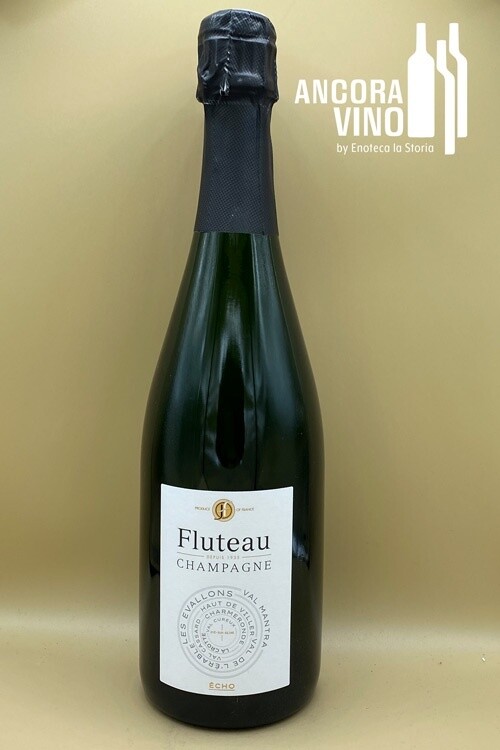
NV Fluteau Extra Brut 'Echo'
$60.00
Sold out
Champagne, France
Sold out
Save this product for later
NV Fluteau Extra Brut 'Echo'
Product Details
Brand: Fluteau
Wine Type: Sparkling Wine
Country of Origin: France
Appellation/Region: Champagne
Farming: Sustainable
"And when you just have that Champagne itch that you need to scratch…here’s a producer that is new to me, but this wine has quickly become one of my current favorites. This wine has a bit of kismet attached to it…While I was putting together the lineup of Champagnes for our annual Champagne tasting a few weeks ago, my obsessive tendencies were getting the better of me and I was fretting about not having a wine from the Aube region. I always like to have every subregion (Cote des Blancs, Montagne de Reims, Valle de la Marne and Aube), type (Blanc de Blancs, Blanc de Noirs, Rosé) and various styles represented. Just as I was complaining about not having a wine from the Aube, one of my “go to” Reps was setting up for a tasting appointment and he held up his finger, reached into his bag and pulled out a bottle of this wine! It was/is a new producer to his portfolio and we tasted the wine for the first time together. I knew immediately that I would put it into the tasting…and then, when it came time to look for wines for this club, I couldn’t help but think of this wine…I love that it’s a new producer for me (and most folks in California), that it’s from the Aube (see notes below) and that’s its wonderfullyrepresentative of the region - and its delicious! I can’t wait to taste some other wines from thisup-and-coming producer. Maybe you will too??" -Mike Guerra, Advanced Sommelier
Winery Background/History
Established in 1935, Champagne Fluteau is one of the oldest family-owned and operated wineries in the Aube region of Champagne. Currently run by Thierry, Jennifer, and their son, Jeremy Fluteau, it produces small quantities of estate-grown and produced Champagnes. Madame Fluteau (Jennifer) is American, from Chicago. She met and married Thierry Fluteau while studying/living in France. Jeremy is the 4th generation taking over the business, the production is 100 % from their own vineyards, mainly pinot noir grapes, certified by the french label “high environmental value” and engaged in the independent wine grower federation.
The smaller Champagne houses have recently been recognized internationally because of their dedication to producing high quality, hand crafted Champagnes that truly reflects the unique soils and climates of the region. At Champagne Fluteau, the emphasis is one of quality, not quantity, and each bottle reflects that dedication. Their vineyards are situated in the Aube region of Champagne in the Cote de Bars district. The unique clay-based soil of this region is ideal for Pinot Noir; however, tucked away are areas where Chardonnay thrives. The vineyards all have southern and southwestern exposures to capture the sometimes elusive ripeness that is not easily found in the Champagne region.
The focus is on sustainable agriculture with organic fertilizers and zero use of chemical herbicides or pesticides. The grapes are all hand harvested and sorted to ensure that the grapes arrive at the press in pristine condition. By combining ancient traditions and modern technology, the Fluteau family brilliantly captures the true essence of Champagne.
Region - Aube
The Aube might be considered — dare we say it? — the hipster Brooklyn of the Champagne region. In this region, producers rebel against the norm, considering themselves farmers and artisans, making tiny quantities of exciting, individualistic sparkling wines. For those who plan to break away from the norm in 2023, Aube Champagne is the drink you need to look at.
The Aube is located over an hour southwest of the heart of Champagne, where the trio of Montagne de Reims, Côte des Blancs, and Vallée de la Marne are all located. The department of the Aube, and its primary vine-growing region, the Côte des Bars, are centered around the medieval city of Troyes, once considered the provincial capital of Champagne. In fact, prior to the phylloxera outbreak in the late 1800s, the Aube had more vines than the Marne.
But the Aube region has a complicated relationship with its region of association. In 1911, when the legal limits of the Champagne region were being outlined, the big houses in the Marne called for the exclusion of the Aube altogether, classifying these vineyards as “Champagne deuxième zone,” or “second-class Champagne.” It wasn’t until 1927 that the Aube was considered a full part of the Champagne region, and to this day, there are no grand or premier cru vineyards located in the Aube. Until recent years, the Aube was simply a source for fruit to be purchased by large houses in the north.
While this may not be the most uplifting of histories, it was important in defining the emerging Aube identity today. Because of the Aube’s history as a farming culture, the majority of the region’s wineries today are grower-producers, ever since former grape growers and new producers alike chose to start bottling their own Champagnes 15 to 20 years ago. Today these small, terroir-driven producers abound, many with a sense of place only recently having become popular in the Marne.
Whereas Champagne has placed its historical significance on blending, producers in the Aube have a tendency to focus more on individuality; single-variety, single-vintage, and single-vineyard Champagnes are quite common.
This focus on singularity may be partially thanks to the influence of another major French winemaking region: Burgundy. In fact, the Côte des Bars is closer to the village of Chablis than it is to Reims or Épernay, and it shares Chablis’ characteristic clay and limestone-rich Kimmeridgian soils. Pinot Noir is king in the Aube, both because of historical demand for these grapes by big houses, and because the warm climate and dense soil suit Pinot Noir well.
Perhaps the two best things about Champagne from the Aube are the diversity of the wines and the experimentation of the winemakers; as with many great things, these two concepts are interwoven. While many of the wines are made from Pinot Noir, styles can differ markedly from producer to producer, bottling to bottling, and vintage to vintage. Aube Champagnes are fueled by new, young winemakers who have often traveled and trained in other winemaking regions. Combine this with land prices that are inexpensive enough to encourage experimentation, and you get Aube Champagnes ranging from rich and opulent to soft and elegant, to rustic and textured, to laser-sharp and lasting. Some are more refined than others, but boring they are not.
Wine
85% Pinot Noir and 15% Chardonnay. Blend is 60% from 2017 with 40% reserve wine from 2015 and 2016. Undergoes full ML. Aged a minimum of 4 years on the lees. Dosage is 6g/L which is technically Extra Brut.
Tasting Notes
Deep yellow with abundant effervescence which feeds a persistent bead of fine bubbles. The nose is very expressive and very present with floral notes: elderflower, peony, and acacia. With aeration, aromas of licorice and gingerbread. Very fresh fruit, pear, plum. The palate is very generous and accessible. The Pinot brings a fleshy character of ripe pear and peach. A touch of Chardonnay prolongs the finish, adds a creamy feel and a candied citrus fruit note.
Reviews/Ratings/Accolades
“Produced from nine different parcels, this Champagne has a mineral edge alongside the bright apple and citrus fruits. The wine's freshness is balanced by its texture and taut aftertaste. Drink now.” 90 Points – Wine Enthusiast
Food Pairing
This balanced Champagne will work wonders as an aperitif but can also accompany salmon, poultry, mushroom dishes, risotto, creamy cheeses, charcuterie and even grilled sausages.
Optimal Drinking Window: Now through 2025.
Powered by Lightspeed
Display prices in:USD